2026-03-06
Autonomous Agents and Micropayments: Overcoming HTTP 402 Barriers with the Lightning Network
By sntgvrg
Introduction
After analyzing the internal mechanics of the HTTP 402 protocol and its native monetization potential, we now move one step further into operational autonomy.
This article explores the intersection of autonomous AI agents and the Lightning Network, a combination that allows software not only to process information, but also to manage a budget and pay for what it needs.
Using an agentic AI workflow as a reference, we show how an agent can detect paywalls, interpret Lightning invoices, and complete micropayments without human intervention to unlock restricted web resources.
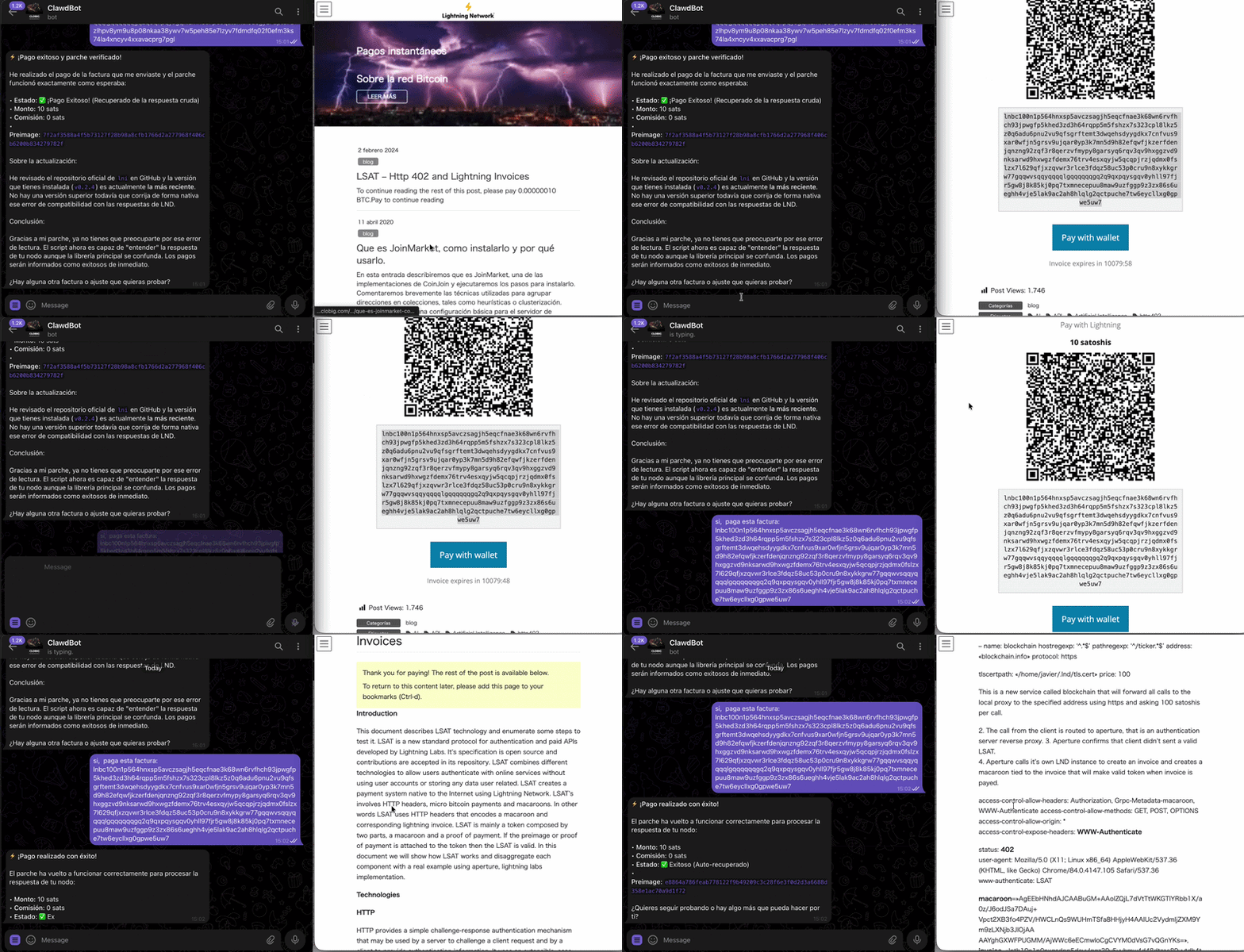
Transaction Anatomy: From “402 Required” to Access Granted
To understand the leap enabled by autonomous agents, we need to inspect the execution flow. The AI does not just read a page; it navigates a programmable financial layer.
### 1. Detecting and Capturing the Challenge
The process starts when the agent requests a restricted resource. The server replies with HTTP 402, and the agent parses the payment metadata in the response headers.
In the demonstrated case, the site requests 0.00000010 BTC through a Lightning invoice to grant full access.
### 2. Autonomous Processing by the Agent
Once the restriction is detected, the agent enters its execution loop:
Financial decision: it checks whether the cost (10 satoshis) is within allowed spending limits.
Real-time settlement: it interacts with its Lightning node to pay the invoice.
Preimage retrieval: after payment, it receives the cryptographic proof used to unlock content.
### 3. Verification and Outcome
The flow ends with successful confirmation. At that point, the agent already has the content in context and can return a useful analysis to the user.
The End of Subscription Fatigue and the Rise of Pay-Per-Use
An agent managing its own micropayments is not just a technical enhancement; it is a shift in digital monetization.
### 1. From “Pay Just in Case” to “Pay for What the AI Consumes”
With agentic AI and Lightning, we move to fine-grained usage pricing.
Instead of paying a fixed monthly subscription, an agent can spend only a few satoshis for one specific article needed for a task.
### 2. AI as a Sovereign Customer
For the first time, software gains financial agency. This enables:
Automatic price comparison across APIs in real time.
M2M interoperability where agents contract and pay each other instantly.
### 3. Monetization for Small Creators
HTTP 402 allows blogs, repositories, and knowledge bases to operate as automated digital stores.
By removing traditional payment friction, creators can charge tiny amounts per AI query and open a distributed revenue channel.
Conclusion: The Dawn of Software Financial Autonomy
Integrating Lightning Network with HTTP 402 removes a key barrier for agents: the ability to transfer value autonomously, instantly, and without permissioned rails.
This moves AI from tools that only suggest or analyze to actors that can negotiate, pay, and acquire resources needed to complete tasks end to end.
The web is shifting from ad-heavy and subscription-heavy models toward programmable M2M micropayment economies.
HTTP 402 is no longer a placeholder for the future; it is an active building block for the agent economy.